A Transactional Romance: Economic Interdependence and Political Constraints in Turkey-EU Relations.

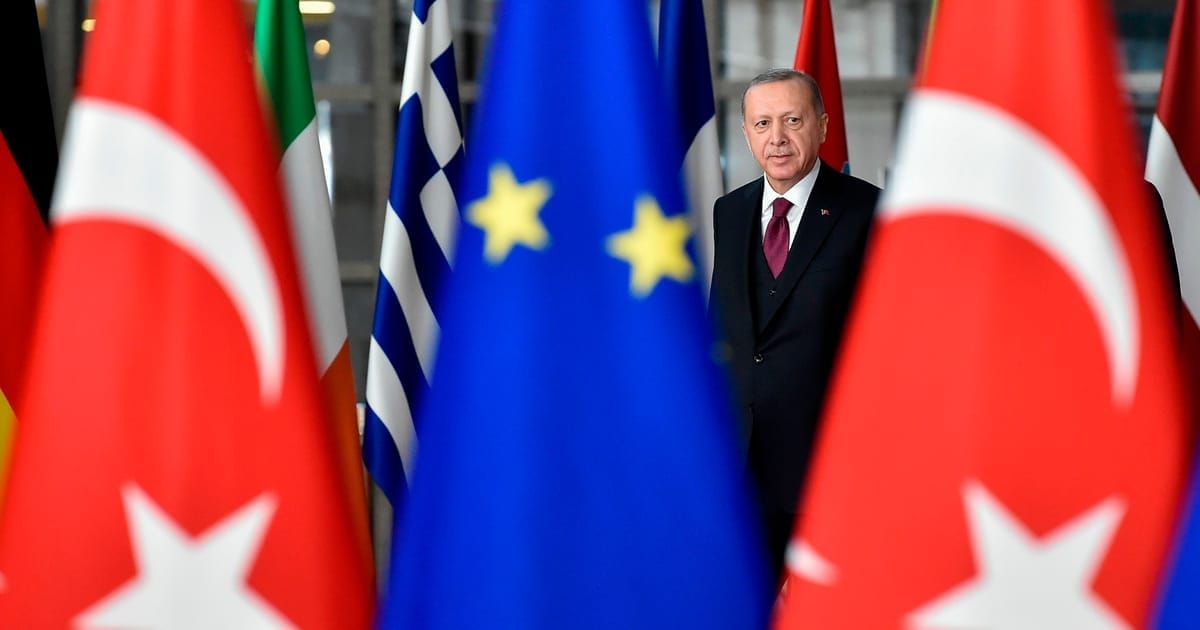
In the last few weeks of 2025, while all eyes were focused on the Free Trade Agreement deal between India and the European Union, another deal was taking shape - much more quietly - behind closed doors with another major actor of the global south: Turkey. Indeed, despite everlasting geopolitical disagreements, public clashes, and being seemingly more apart than ever before, both parties are negotiating for updating and expanding the 1995 customs union to include services and e-commerce. In fact, trade volume and other transactions are reaching new heights each year. This ambivalent relationship between the EU and Turkey can be portrayed as a « transactional romance ». While the European Parliament in Strasbourg regularly condemns Turkey for « human-rights violations », the Commission faces the bitter but undeniable reality of needing to cooperate on many economic and geopolitical topics that we shall illustrate below.
A marriage haunted by history
These contemporary tensions between European countries and Turkey actually find their roots in the decades following the early steps of the European construction process. Rising disputes over maritime zone delimitations and between local Greek and Turkish Cypriots led the Turkish government to intervene in the Island in 1974, leading to the separation of the island into Greek and Turkish territories. To this day, Cyprus remains the single largest point of blockage in Turkey’s EU adhesion process, as the Turkish government does not recognize the Republic of Cyprus. Beyond the island's status, other factors have led to the freeze of the Turkish EU process, as European instances have repeatedly condemned what is being called « democratic backsliding ». The most recent moment of significant strain was the jailing of Presidential candidate and Mayor of Istanbul, Ekrem İmamoğlu.
Allies when convenient, rivals when visible
However, geopolitical friction extends far beyond domestic politics. This was notably evident during the Azerbaijan-Armenia conflicts in 2020 and 2023, where Turkey’s massive military support (notably via Turkish-made Baykar offensive drones) played a key role in Azerbaijan re-taking Karabakh. Despite this, the European reaction did not go beyond condemnation. Similarly, Turkey and the EU face disagreements over other conflicts in the Middle East, most recently in Gaza. Indeed, Turkey vividly condemned human rights violations in Gaza and accused Israel on multiple occasions of committing genocide, while keeping close ties with Hamas and hosting Hamas officials in Istanbul and Ankara for negotiations. On the other hand, the EU has classified Hamas as a terrorist organization since 2001. Moreover, European countries have faced increasing backlash in the Muslim world for their perceived ambiguous stance on Israel’s human rights violations.
The refugee bargain
Parallel to these security disputes, a major point of political tension arose during the refugee crisis of the early 2010s. The Syrian regime’s violent internal repression displaced millions, leading nearly 4 million refugees to seek sanctuary in Turkey and subsequently exerting unprecedented migratory pressure on the borders of the European Union. Intense negotiations led to the Refugee Deal of 2016, where Turkey accepted to host these populations in exchange for 6 billion euros, promised visa-free access for Turkish nationals, and a reinitiating of the adhesion process. Ten years later, both parties blame each other for failing to deliver: European politicians accuse Turkey of blackmail over migrants, while Turkish citizens still lack visa-free access. As of 2026, Turkey and the EU seem irreconcilable; the divorce appears finalized. Despite all of this, both sides are perpetually compelled to cooperate in areas ranging from finance and trade to security and energy.
Too big to ignore
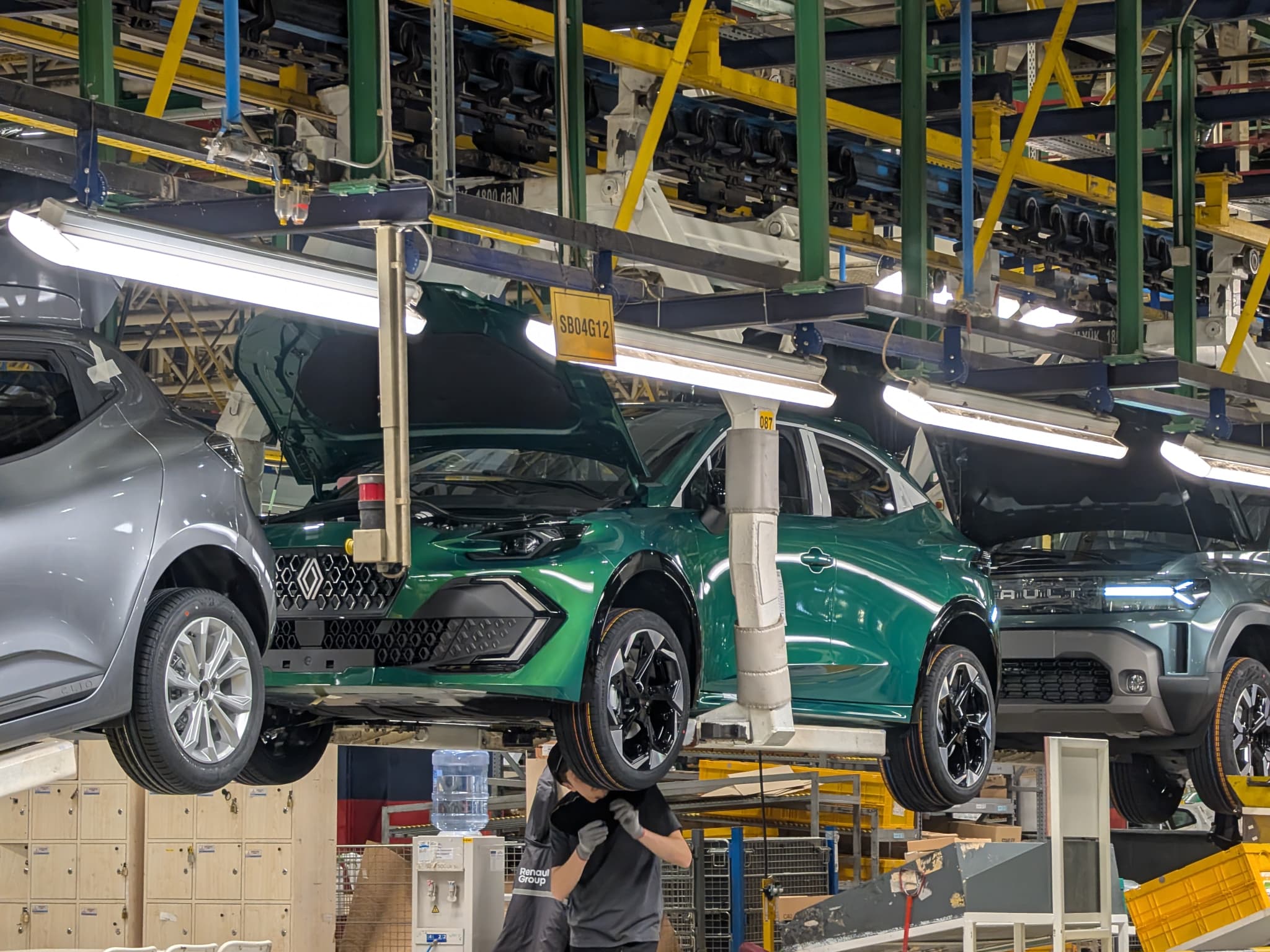
First of all, Turkey and the European Union remain major trade partners, with bilateral trade reaching a record high of 210 billion euros in 2025. The trade balance is remarkably equal, with Turkey exporting 105 billion while importing 100 billion from the EU. Turkey has also solidified its role as a major automotive hub; Turkish factories produced over 1.05 million cars destined for European consumers last year, supported by massive investments from Stellantis and Renault. Furthermore, FDIs from Turkey to the EU are rising, reaching 30 billion euros in 2025. Most notably, in 2024, the Turkish manufacturer Arçelik finalized a nearly 1 billion euro merger to take a 75% stake in Whirlpool’s European operations, making its subsidiary « Beko Europe » the continent’s largest home appliances manufacturer.
When Ankara sneezes, Europe catches a cold
This economic integration is underpinned by critical banking relations, as European banks hold over 150 billion euros of assets and exposure in Turkish banks, notably via Spain’s BBVA and France’s BNP Paribas. The best illustration of this interdependence was the « Black Friday » of August 2018, when BBVA’s and BNP Paribas’ stocks plummeted more than 3% in one day as the Turkish Lira crashed by 18% against the dollar in one session. Indeed, when the Lira devaluates, European banks must increase their expected loss provisions, which reduces their ability to lend in Europe. The European Central Bank was deeply concerned about a « contagion », fearing that a financial fever in Ankara could stall the engine of European growth by « locking the brakes » on loans through spiked risk premiums. This shows how Europe’s financial stability is now partially anchored to the Turkish Central Bank’s stability.
Pipelines and power plays
Beyond finance, the EU and Turkey are « condemned » to collaborate on energy. The urgent need to diversify providers following the Russian invasion of Ukraine in 2022 has placed Turkey back at the center of the strategic chessboard. Driven by a need for a Southern Gas Corridor, Turkey’s infrastructure has become a cornerstone of European energy independence. This was codified on July 18, 2022, when the EU and Baku signed a Memorandum to double gas imports by 2027; a deal that inevitably places Turkey as the pivotal midstream link via its multi-billion euro TANAP pipeline. We can define Turkey as a Natural Monopoly in this context, as its infrastructure is economically unviable to bypass in the near future.
Against this backdrop, other actors in the Mediterranean Basin have sought to break this infrastructure path dependency. On January 2, 2020, the EastMed Pipeline accords were signed by Greece, Cyprus, and Israel to bypass Turkish waters. However, this « bypass » is precisely what stalled the project. Indeed, avoiding Turkey meant an astronomical cost of €7 billion for a complex subsea pipe. Furthermore, the EU Green Deal targets, aiming to reduce gas consumption by 30% by 2030, rendered a project planned for the post-2030 era a commercially obsolete risk. Finally, the 2019 Turkish-Libyan Maritime Deal created a «maritime wall» that turned the project into a legal nightmare. Crucially, Europe’s demand for energy is highly inelastic; the Union requires a sustainable supply regardless of political costs. These developments reinforce Turkey’s role as an Energy Hub and a « Price Maker » capable of leveraging transit fees for political concessions.

An indispensable middleman
Such geopolitical crises often represent an opportunity for pragmatism to outweigh friction. The Russia-Ukraine war brought to the fore how Turkey helped the EU avoid a Negative Supply Shock that would have led to a stagflation crisis. The outbreak of the war led to a blockade of Ukrainian grain exports; as Ukraine produces 10% of the world’s wheat and 15% of its corn, this could have led to skyrocketing prices. Turkey’s refusal to join Western sanctions, although controversial, enabled it to act as the mediator of the « Grain Deal » in 2022, reopening the « lungs » of the global food supply. Turkey’s unique position as the only NATO member with open channels to Vladimir Putin contributed to reducing geopolitical uncertainty and avoiding a worse exogenous shock for the EU.
A textbook prisoner’s dilemma
Ultimately, this relationship has evolved into a masterclass of « Game Theory » and Strategic Interdependence. Both parties face a « Prisoner’s Dilemma »: despite ideological disagreements, open confrontation would lead to a worse outcome for both. The best illustration remains the 2016 Migration Deal. If Turkey « defects » and opens the borders, the EU faces a political crisis; conversely, if the EU stops paying or imposes sanctions, Turkey faces economic and social instability it cannot afford amidst its hyper-inflation crisis. The result is a « Nash Equilibrium »: a state where neither side can change their strategy without making themselves worse off. They are « locked » into cooperation.
In summary, Turkey-EU relations have entered a phase of Weaponized Interdependence, where both parties wield significant leverage. As they have grown into massive trade partners, Turkey has learned to utilize its control over vital « bottlenecks » as a source of Bargaining Power. Conversely, the EU utilizes its stewardship of the Customs Union and financial markets to maintain strategic alignment. Consequently, the relationship has evolved from an Accession Model toward a Transactional Model governed by « Tit-for-Tat » dynamics: a framework where cooperation is sustained only as long as it is reciprocated.
However, the current geopolitical paradigm offers little room for prolonged friction. With the United States no longer acting as an unwavering ally and China posing a systemic threat to European industrial independence (all while Turkey faces the risk of being drawn into the Middle Eastern powder keg), strategic isolation is an unaffordable luxury. To face tomorrow’s common challenges, both Turkey and the European Union must look beyond mere transactions and collaborate through a lens of mutual trust and a clear-eyed recognition of each other’s sovereign interests.
Read the original submission: