The Illusion of Neutrality: Justice, Power, and International Law

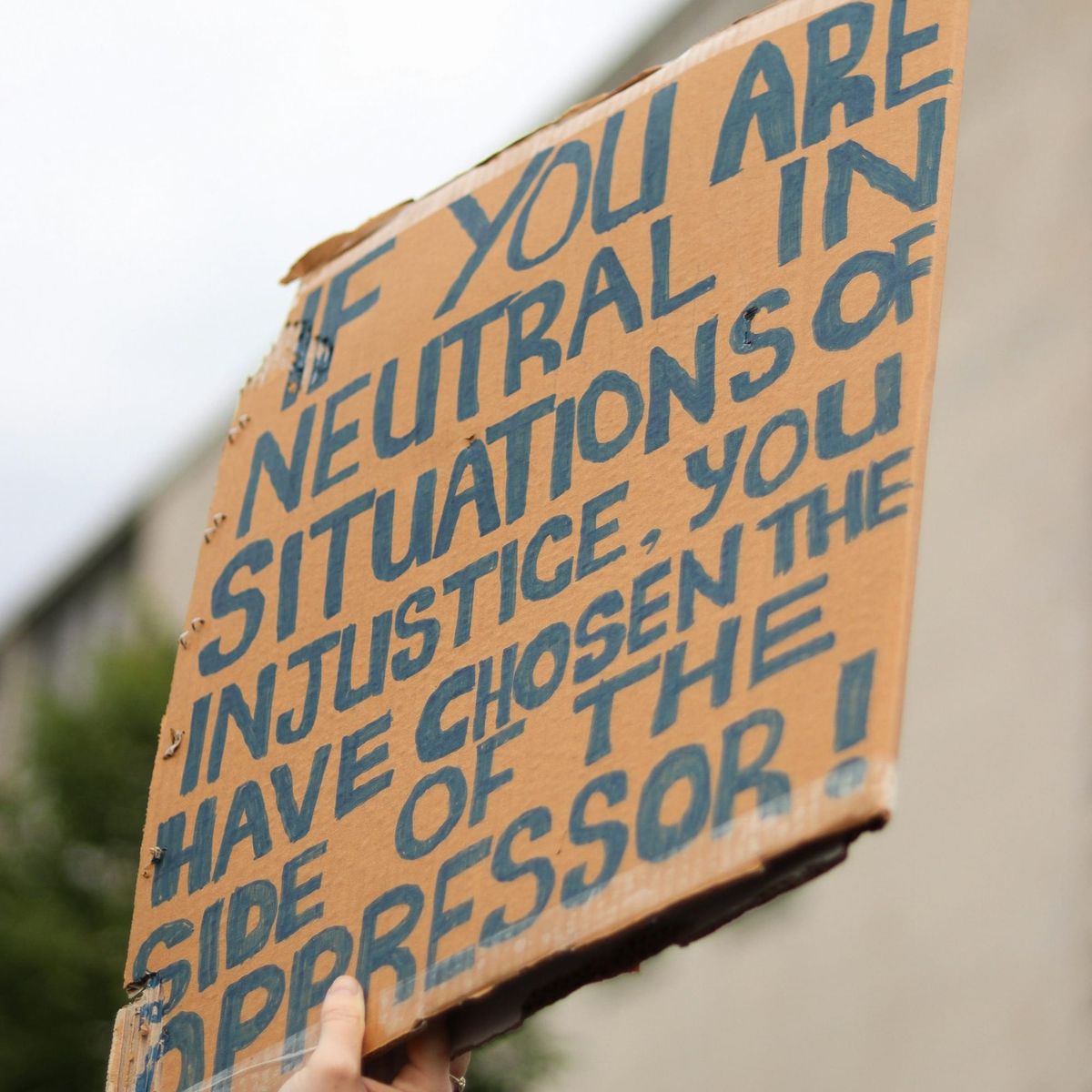
In an interconnected world, international law presents itself as a system, designed to uphold justice beyond borders. It regulates war, protects human rights, and holds actors accountable. Yet, its authority is often questioned, particularly when some states are prosecuted while other more powerful states evade scrutiny. Additionally, legal norms shift according to political interest. These conflicting viewpoints raise a question: is international law a true reflection of universal justice, or merely an instrument for power shaped by hegemons? Augustine of Hippo’s (1998) writing laid the foundation for just war theory, and thereby provides a moral basis for the idea of just law. However, thinkers such as Carl Schmitt (2005) and Marti Koskenniemi (2005) challenge this neutrality by emphasizing the influence of sovereignty and political interest. In this article I am going to argue that although international law is rooted in moral ideals, it ultimately operates in a realistic framework shaped by power. By studying its historical foundations, critical perspectives, and real-world application, this analysis will argue that international law is neither entirely just or a tool for power, but instead an unstable combination of both.
Augustine of Hippo (1998) wrote The City of God during a period of political instability and frequent warfare, as the Roman Empire faced both internal decline and external threats. He developed a moral theological framework to guide human actions in times of conflict. Instead of rejecting war in its entirety, Augustine argued that war could be morally justified under certain conditions, by emphasizing that justice is objective and rooted in a higher moral order. He outlined the key principles for what later would be known as just war theory (Augustine, 1998). Firstly, there must be a just cause, such as self-defense or the protection of the innocent (ibid). Secondly, war must be declared by a legitimate authority, ensuring that the use of force is not driven by private interests (ibid). Thirdly, war must be carried out with the right intention, aiming to restore peace rather than pursue revenge or gain (ibid) . Together, these principles reflect the belief that law and political action should be grounded in moral truth, not merely in the pursuit of power. These ideas continue to influence modern legal systems and shape the principles underlying international law today (Dyson, 1998).
The moral framework developed by Augustine of Hippo continues to influence the structure and purpose of modern international law (Augustine, 1998). Today, international law seeks to regulate war, protect human rights, and create accountability for states and individuals who violate these norms. Its goal is to establish a system where justice applies beyond national borders. This reflects the idea that moral principles should guide political actions (Augustine, 1998). It is embodied in institutions such as the United Nations Charter (United Nations, 1945) and the International Criminal Court (Rome Statute, 1998). They aim to limit the use of force and hold perpetrators of serious crimes accountable. The framework tries to translate moral principles into concrete legal rules that govern state behavior. Scholars like Hersch Lauterpacht (1950) played an important role in shaping this vision by emphasizing that international law should protect individuals, not just states. By focusing on human rights, Lauterpacht emphasized that justice should be based on moral principles that apply to everyone. In this way, international law tries to turn moral ideas into clear rules that countries are supposed to follow. It presents itself as fair and equal for all states, no matter how powerful they are. However, this ideal has been heavily criticized, raising questions about whether international law can truly function independently of political interests (Koskenniemi, 2005).
Carl Schmitt argued that law can never be fully separated from politics. For Schmitt, true sovereignty lies in the power to decide when legal norms apply, and when they do not (Schmitt, 2005). In times of crisis, those in power can suspend legal rules. This demonstrates that the neutrality of international law is fragile and often dependent on political authority. Building on this critique, Martti Koskenniemi claims that international law is shaped by political interests rather than purely moral principles (Koskenniemi, 2005). He explains that legal reasoning often alternates between two extremes: “apology,” where law serves the interests of powerful states, and “utopia,” where law aspires to ideal justice. In practice, legal arguments can be used to justify almost any position. So the outcomes of international law frequently reflect power rather than principle. Together, these perspectives reveal a key insight: while Schmitt exposes how
power determines when law is applied, Koskenniemi demonstrates how law subsequently legitimizes those decisions. Thus, international law does not eliminate power. Instead, it often works to justify and reinforce it. This raises serious doubts about whether justice is ever fully realized in the international system.
The practical application of international law shows both its potential for justice and its inherent limitations. Amal Clooney has taken a leading role in seeking justice for victims of the Yazidi genocide committed by the Islamic State (ISIS). Beginning in 2016, she represented survivors such as Nobel Peace Prize laureate Nadia Murad and other Yazidi women who were enslaved, raped, and forced from their homes during ISIS’s campaign of mass violence in Iraq (Clooney, 2017). By working to bring these crimes to international justice Clooney and her team has supported prosecutions of ISIS members in German courts and advocated for investigations at the International Criminal Court (ICC) (International Criminal Court, 2021). In this context, international law appears to fulfill its moral goal, acting as a force for justice by holding perpetrators accountable and giving recognition to victims who might otherwise never see justice. This reflects the vision of thinkers like Augustine of Hippo, who saw accountability and the protection of the innocent as central to a just legal system (Augustine, 1998).
However, the application of international law is often constrained by political realities (Schmitt, 2005; Koskenniemi, 2005). Prosecutions remain uneven and selective, frequently dependent on the willingness of states or courts to act. Many ISIS members have not been brought to trial. Additionally, numerous affected communities remain without full redress or compensation. For example, civil suits such as the one filed in U.S. federal court against the French company Lafarge for allegedly aiding ISIS demonstrate how victims must sometimes pursue accountability through complex and protracted legal processes even after criminal penalties have been imposed (United States v. Lafarge, 2022). This illustrates the interplay between moral goals and political realities in international law. Augustine’s aspiration for justice persists, but, as Schmitt suggests, political power influences when and how legal norms are applied. Moreover, as Koskenniemi argues, international law often legitimizes outcomes shaped by those power structures.
International law shows the tension between moral aspiration and political reality. Augustine frames its authority as rooted in objective justice (Augustine, 1998). Yet Schmitt exposes that without sovereignty and power, moral claims are powerless (Schmitt, 2005). Koskenniemi pushes further, revealing that law is never fixed but always interpreted through political contexts, making justice contingent rather than absolute (Koskenniemi, 2005). Together, they show that law’s legitimacy depends on appearing moral while remaining enforceable. Morality alone cannot compel, and power without moral framing risks illegitimacy. As Walzer (1977) underscores, the challenge in practice is to navigate this interplay. Law must aspire to justice, but it can only operate within the constraints of politics. This illustrates that international law is simultaneously ideal and pragmatic, normative and contingent.
In conclusion, International law is neither purely just or simply an instrument of power. It is both grounded in moral ideals yet constrained by political realities. Its justice is never absolute. Rather, it is negotiated, contested, and uneven, shaped by the interplay of ethical aspiration and political force. Ultimately, the question may not be whether international law is just, but whose vision of justice it enforces and who holds the authority to decide. Thus, the legitimacy and direction of international law remain open to contestation and critical scrutiny.
References
- Augustine. (1998). The City of God against the Pagans (R. W. Dyson, Trans.). Cambridge University Press. (Original work published ca. 426 CE)
- Clooney, A. (2017). Yazidi genocide: Seeking justice.
- Dyson, R. W. (1998). Introduction. In Augustine, The City of God against the Pagans (pp. xix–xlviii). Cambridge University Press.
- International Criminal Court. (2021). ICC investigations and cases: Iraq/ISIS. https://www.icc-cpi.int/
- Koskenniemi, M. (2005). From apology to utopia: The structure of international legal argument (2nd ed.). Cambridge University Press.
- Lauterpacht, H. (1950). International law and human rights. Stevens & Sons.
- Rome Statute of the International Criminal Court, July 17, 1998, 2187 U.N.T.S. 90.
- Schmitt, C. (2005). Political theology: Four chapters on the concept of sovereignty (G. Schwab, Trans.). University of Chicago Press. (Original work published 1922)
- United Nations. (1945). Charter of the United Nations. https://www.un.org/en/about-us/un-charter
- United States v. Lafarge S.A., No. 22-cr-00515 (E.D.N.Y. 2022).
- Walzer, M. (1977). Just and unjust wars: A moral argument with historical illustrations. Basic Books.
Read the original submission: